Our Services
New England Dermatology Associates :: Medical Dermatology

About Rosacea
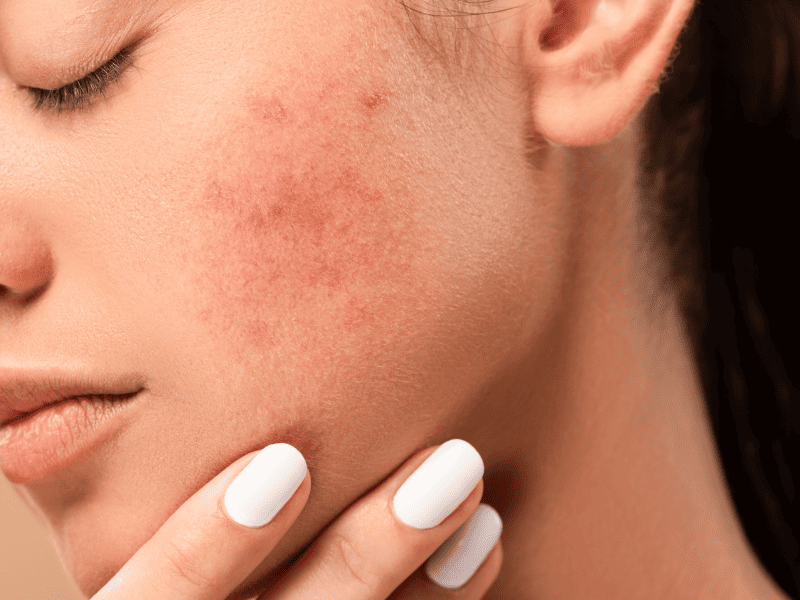
Rosacea is a skin condition that causes redness to the facial area, as well as tiny red bumps. In the majority of cases of people with rosacea, only the face is affected, but in more severe cases, the eyes can be affected as well. While rosacea can affect people of all ages, it is more common in women, people of northwestern European descent and people between the ages of 30 and 50.
Rosacea Q&A
What causes Rosacea?
While the exact cause of rosacea is unclear, there are known causes of some of its triggers. Some of these triggers include blushing, hot climates, hard exercise, anxiety/stress, cold wind and sunburn among many others. There have also been cases where medications and skin treatments have caused rosacea as well.
Some other causes include:
- Spicy Foods
- Alcohol
- Chemical Peels
- Caffeine
- Sunlight
- Blushing
What are Treatment Options?
When deciding what your best treatment options are you must first find out how severe your case is. The most common forms of treatment are topical or oral antibiotic agents. For mild cases, cosmetics may even do the trick. But for more severe cases, there is a laser therapy option for those individuals which essentially helps make the redness disappear. The best way to make sure rosacea does not worsen is to avoid the common triggers listed above. To figure out which treatment is best for you, consult our office today, and one of our expert dermatologists will help you make the best decision.


